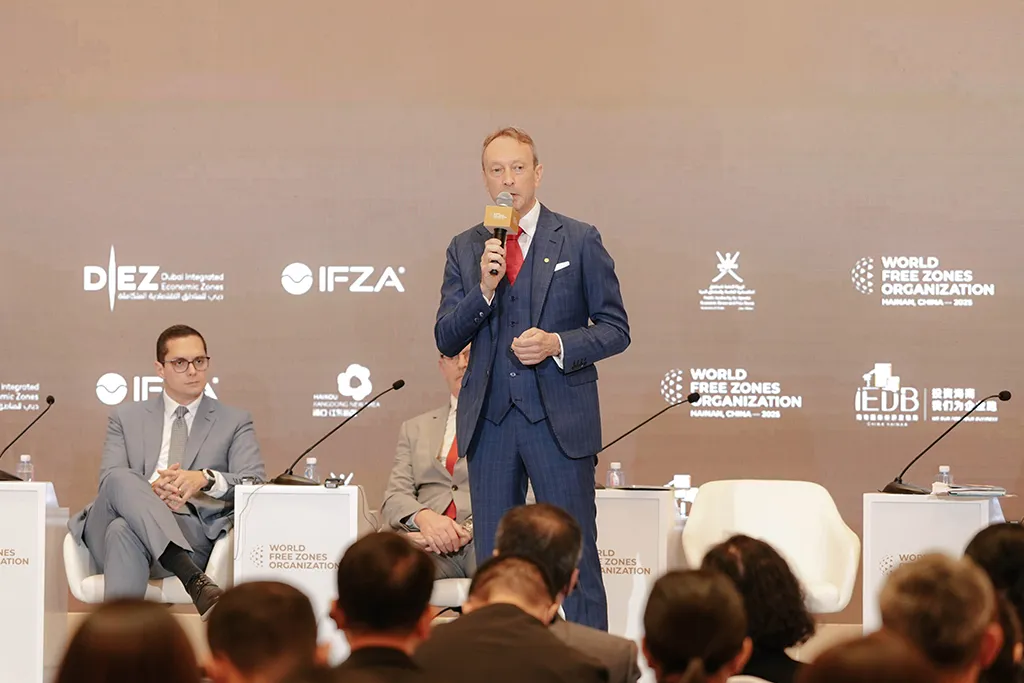
In a world where global trade is being redefined by innovation, connectivity, and policy reform, Jochen’s contribution stood out for its clarity and vision.
Here are the key takeaways from his panel remarks:
1. Free Zones Must Be Built for the Future
Jochen emphasised that the role of Free Zones is changing. They are no longer just about tax benefits or logistics; they must become innovation-driven ecosystems that support long-term economic development.
2. Policy Reform is a Game-Changer
He highlighted the importance of regulatory innovation in attracting investment and building trust. Clear, stable, and forward-looking policies are essential to make free zones globally competitive.
3. Support for SMEs and Startups is Crucial
Small and medium enterprises (SMEs) are the backbone of any economy. Free zones should offer them the tools to grow, like access to funding, simplified trade processes, and innovation support. When SMEs succeed, the entire ecosystem benefits.
4. Collaborations Drive Progress
He stressed the power of collaboration in building modern infrastructure and delivering high-quality services. Governments set the vision, but the private sector brings agility and innovation.
5. Technology is the Enabler
The future of trade is digital, and free zones must lead the way. From AI to blockchain, Jochen encouraged free zones to embrace digital transformation. Smart technologies can improve efficiency, transparency, and sustainability.
Final Thoughts
Jochen’s panel contribution was a call to action: Free Trade Ports must evolve with the times. With the right policies, partnerships, and innovation mindset, they can become powerful engines of global prosperity. As the official sponsor, IFZA’s support of this global event is part of our commitment to forging longstanding partnerships that aim to contribute to Dubai’s leadership position in the global Free Zone industry.